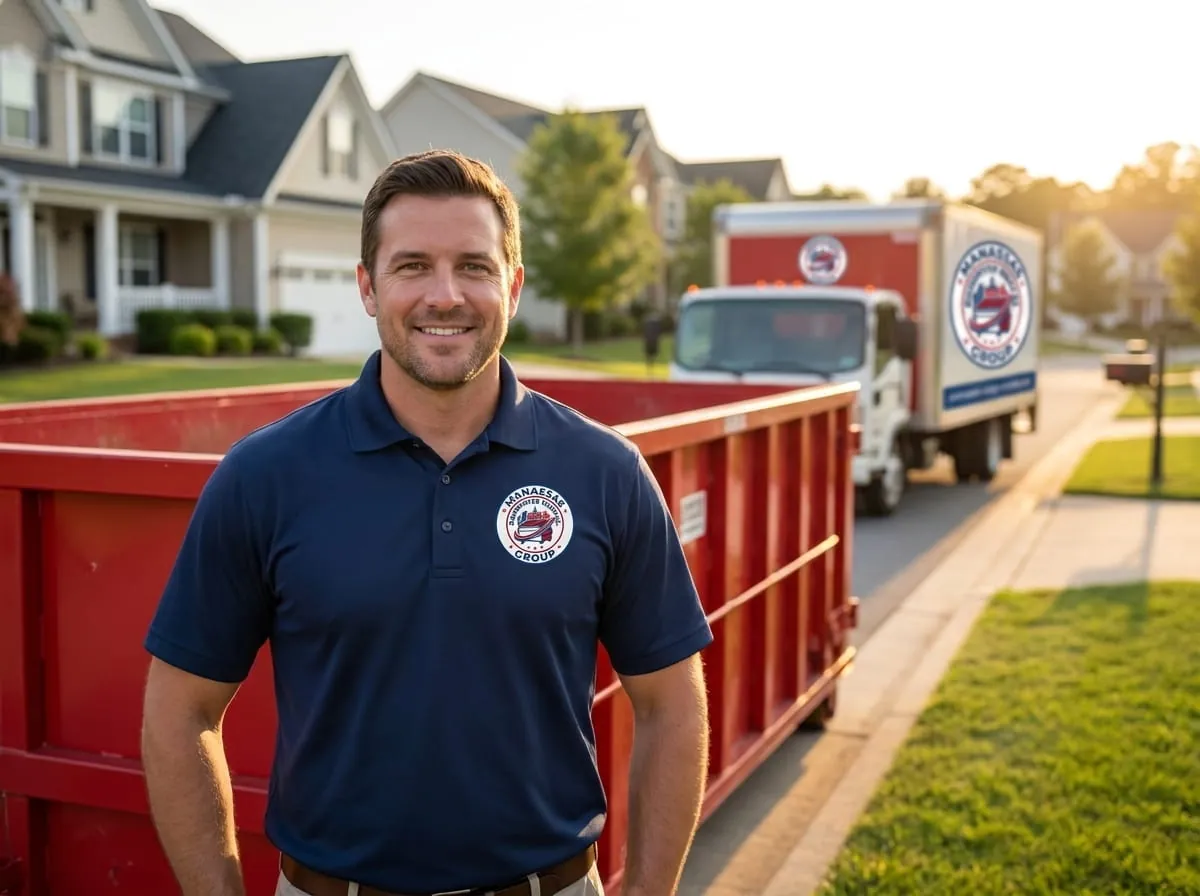
Most people who rent a roll-off box think of it as a one-way trip: fill it up, we haul it off, done. Fair enough. But what actually happens to that debris after it leaves your driveway in Manassas is a longer story, and if you understand even the basics of it, you can save money, cut your disposal weight, and keep a surprising amount of material out of the ground. I've been running boxes around Prince William County long enough to watch a load of what looks like pure junk get pulled apart into four or five separate revenue streams. Not everything gets landfilled. Not by a long shot.
This is a practical walk-through of how debris gets sorted and diverted, what's genuinely recyclable, and how to plan a project so you throw away less in the first place. I'll keep the local references general on purpose, because programs and acceptance rules change, and the last thing you want is to load a trailer based on something you read online a year ago. When it matters, call the City of Manassas or Prince William County directly and confirm.
What happens to a roll-off load after pickup
A loaded box doesn't usually go straight to a landfill and get buried. Mixed construction and demolition debris — what the industry calls C&D — often heads first to a transfer station or a sorting facility. There, some combination of machine and hand sorting separates out the material that has value or that regulations require be handled differently. Clean loads move faster and cost less to process, which is exactly why haulers care so much about what you put in the box.
The sorting logic is simple once you see it. Heavy, dense, uniform materials get pulled because they're worth money or because they can be crushed and reused. Metals come out first, almost always, because they're valuable and easy to grab magnetically or by hand. Cardboard and clean wood come out when the load is clean enough to make separating them worthwhile. Concrete, brick, and block get diverted to be crushed into aggregate. What's left — the genuinely mixed, contaminated, or non-recyclable remainder — is what actually gets landfilled.
Here's the part that trips people up: contamination kills recovery. A dumpster of clean cardboard is a recyclable commodity. That same cardboard soaked in joint compound, mixed with food waste, and tangled with plastic film is garbage. The cleaner you keep your materials, the more of your load gets diverted and the less you pay in landfill tipping fees, which are charged by weight.
The four materials worth separating
Four categories account for the bulk of what gets recovered from a typical Manassas renovation or cleanout. Learn these and you're most of the way there.
Metal
Metal is the easy win. Steel, aluminum, copper, brass — all of it has scrap value, and all of it is fully recyclable more or less indefinitely without losing quality. Old appliances, HVAC units, water heaters, gutters, pipe, rebar, steel studs, aluminum trim, even the nail-studded metal banding off a pallet. If it's ferrous, a magnet grabs it downstream. If it's non-ferrous like copper wire or aluminum, it's worth enough that you might pull it yourself before the box ever gets loaded. Plenty of folks in Prince William County set copper and brass aside and take it to a scrap yard directly for cash. That's money you'd otherwise be paying us to haul.
Cardboard
Renovations and move-outs generate absurd amounts of cardboard — flooring boxes, appliance packaging, fixture cartons, the works. Broken down flat and kept dry, cardboard (old corrugated container, or OCC, in the trade) is one of the most reliably recycled materials there is. Wet or greasy cardboard is a problem, so keep it under cover. If you're doing a big install, flatten boxes as you go and stage them separately rather than crushing them into the debris box. A dedicated cardboard pile is easy to recycle; cardboard buried in mixed debris usually isn't.
Clean wood
Clean, untreated wood — dimensional lumber, plywood offcuts, pallets, framing scrap — can be ground into mulch, boiler fuel, or engineered wood feedstock. The word that matters is "clean." Pressure-treated lumber, painted or stained wood, and anything with heavy hardware or laminate is a different animal and typically can't go into the clean-wood stream. Deck boards from an old pressure-treated deck are not clean wood. New-construction framing scrap usually is. When in doubt, keep the treated stuff separate and ask.
Concrete, brick, and block
Heavy inert material is a diversion success story most homeowners never think about. Broken concrete, brick, block, and clean masonry get crushed and reused as aggregate base for roads, driveways, and fill. Because this stuff is so dense, it also dominates your load weight — a small volume of concrete can max out a box's weight limit fast. That's why haulers often price concrete-only or "clean fill" loads differently, and why mixing a little concrete into a general debris box is an expensive mistake. If you've got a demolished patio or sidewalk, ask about a dedicated clean-fill box. It's usually cheaper and it's nearly always recycled.
Local context, kept honest
Prince William County operates a landfill and solid waste system, and the City of Manassas runs its own residential collection and recycling programs. Between them there are drop-off options, household hazardous waste events, yard-waste handling, and material-specific rules that shift over time. I'm deliberately not quoting hours, fees, or acceptance lists here, because those are exactly the details that go stale and get people turned away at the gate with a full trailer.
What I'll say confidently is this: the infrastructure to divert most of your project debris exists locally, and a good hauler already knows how to route materials through it. What you should do before a big job is make one phone call to the City of Manassas or to Prince William County to confirm current rules for whatever you're dealing with — especially anything that smells like hazardous waste (paint, solvents, chemicals), electronics, tires, appliances with refrigerant, or mattresses. Those categories almost always have special handling, and they're the ones most likely to get a load rejected or surcharged.
If you're not sure how a specific pile should be handled or which materials are worth separating on your particular job, that's a two-minute conversation. Call us at (571) 518-5792 and we'll tell you straight what's worth pulling out and what isn't for your situation.
The cheapest debris is the debris you never generate
Diversion is good. Not creating waste in the first place is better, and it's where the real savings hide. A few habits change the math on a project.
Measure and order tight. Overordering materials is the number one source of jobsite waste. Extra drywall, extra flooring, extra lumber — half of it ends up in the box. Order closer to actual need and keep the returns receipts.
Deconstruct instead of demolish where it makes sense. Swinging a sledge is fast, but it turns reusable cabinets, doors, fixtures, and trim into landfill. Taking things apart carefully preserves resale and donation value. It's slower, but on the right job the recovered value more than pays for the labor.
Stage your materials. Set up separate piles or bins as you work — metal here, cardboard there, clean wood over there, everything else in the box. Sorting at the source costs you nothing but a little discipline, and it's a hundred times easier than digging a commingled box apart later. It won't happen.
Right-size the container. A box that's too big tempts you to fill it; a box that's too small tempts you to overload it. Getting the size right the first time keeps you from paying to haul air or from paying overage fees on weight.
Donate what still has life in it
An enormous amount of what goes into cleanout boxes isn't broken — it's just unwanted. Cabinets in good shape, working appliances, doors, windows, light fixtures, unused tile and flooring, lumber, hardware, furniture. Around Manassas and the broader county there are building-material reuse outlets and charity resale operations that will take a lot of this, and some will even pick up larger items. Donating keeps usable goods in circulation, gets you a receipt for a possible deduction, and shrinks your haul-away weight all at once.
The trick is to sort for donation before you sort for the dumpster. Once something's in the box under a pile of drywall, it's gone. Walk the space first, pull the good stuff, and stage it separately. If you've got a mix of donatable items and genuine junk, our junk removal service can help you separate the two and route the usable material toward donation rather than the landfill — which is usually the outcome everybody prefers anyway.
A simple sorting plan for your next project
You don't need a recycling degree. You need four staging spots and a little forethought. Before the box arrives, decide where metal, cardboard, and clean wood will go, and reserve the box for true mixed debris. Pull anything donatable before you pull anything else. Keep the hazardous and special-handling categories — chemicals, electronics, tires, refrigerant appliances — completely out of the box and plan a separate trip for them after you've confirmed the current rules with the county or city.
Do that, and two things happen. Your landfill weight drops, which drops your cost, and a much larger share of your project gets a second life instead of a burial. That's not a feel-good story. It's just how the economics work when you understand where the material goes.
We've been hauling in and around Manassas and Prince William County for a while, and we're happy to talk through the smartest way to handle a specific job before you lift a finger. You can learn more about our team or get in touch to size a box and set up a plan. The goal is the same as yours: less waste, lower cost, less hassle.

Founder, Manassas Dumpster Rental Group — sharing straight advice from more than 15 years of local hauling experience.