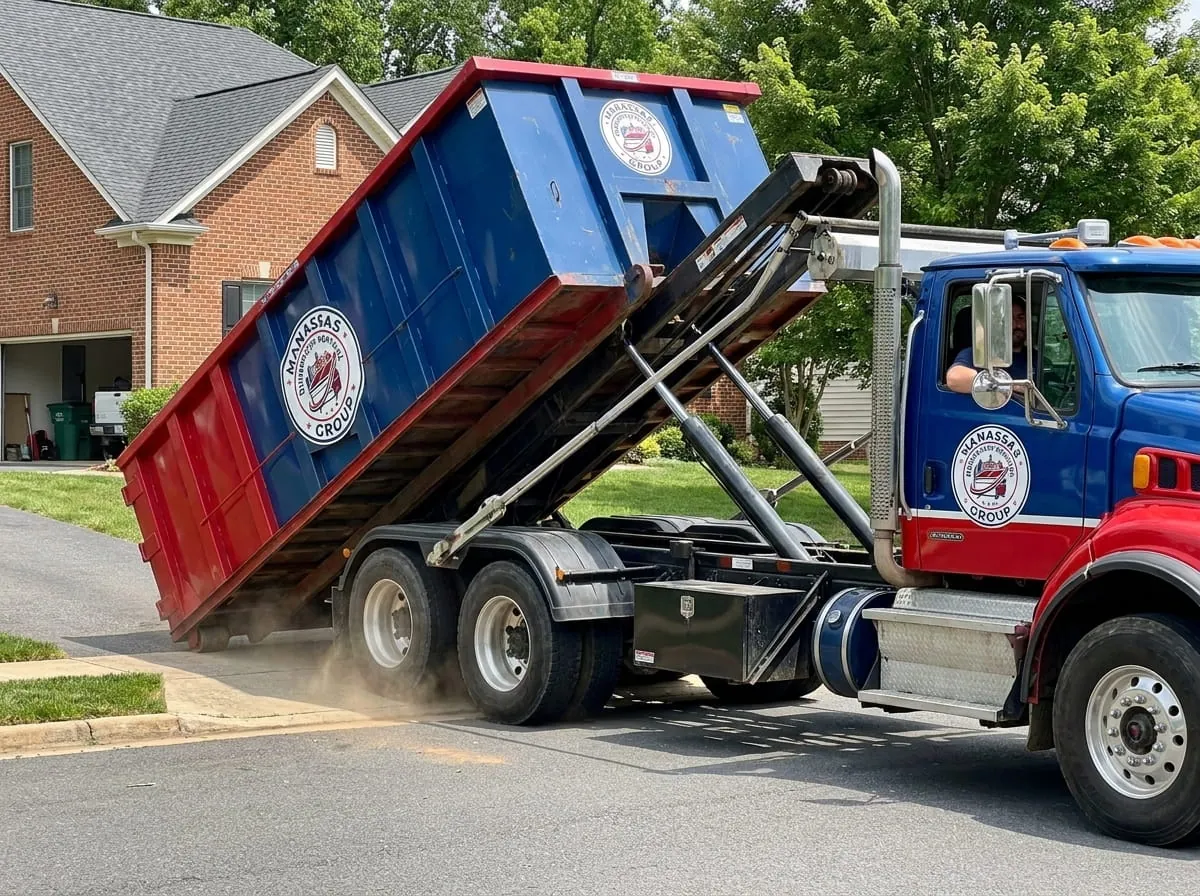
I have hauled off the contents of more Manassas garages, basements, and attics than I can count, and the one thing that separates a smooth cleanout from a miserable one is not muscle. It's having a plan before you touch a single box. Most people start in the messiest room, get overwhelmed by lunch, and quit. Then the pile sits in the driveway for three weeks.
This is the checklist I give friends and family when they call me before a move, a downsizing, or clearing out a parent's house. Work it room by room, sort as you go, and rent the right container so you're not making four dump runs in your own SUV.
Before you start: three piles and a staging area
Every item you pick up gets one of three fates. Keep, donate, or toss. That's it. Don't add a "maybe" pile — the maybe pile is where cleanouts go to die. If you can't decide in ten seconds, it's a keep, and you deal with it during the final pass.
Set up a staging zone in the garage or driveway before you begin. You want a clear path for the toss pile to move straight into the dumpster, a corner for donation boxes, and a spot for anything going to recycling or hazardous drop-off. Keep contractor bags, a box cutter, and a marker on hand.
One more thing. Order your dumpster for day one, not day three. People underestimate how fast they fill it once momentum builds, and a container in the driveway is the thing that keeps you honest.
Garage: start here
The garage is the right place to begin because it's usually full of clear junk — broken tools, dried paint, warped plywood, the exercise bike nobody's touched since 2019. Quick wins build momentum.
- Toss: broken lawn furniture, cracked plastic bins, old hoses, rusted tools, scrap wood, empty cardboard.
- Donate: working power tools, sporting goods, bikes in decent shape, unopened supplies.
- Recycle or drop off: motor oil, antifreeze, car batteries, and old gasoline. These do not go in the dumpster. Prince William County has a hazardous waste program for exactly this.
Paint is the one everyone gets wrong. Latex paint can go in the trash only if it's fully dried out — pop the lids and let cans sit in the sun, or add kitty litter to speed it up. Oil-based paint always goes to household hazardous waste.
Basement: the archaeology dig
Basements collect the stuff you meant to deal with later. Later is now. Expect furniture, boxes of paperwork, holiday decorations, and at least one dead appliance.
Furniture and mattresses are bulky but dumpster-friendly. Old paint-soaked carpet, drywall from that half-finished remodel, and busted shelving all go in too. Watch for damp cardboard and mildewed items — bag those separately so mold spores don't spread while you carry them up the stairs.
Appliances need a heads-up. A fridge, freezer, or window AC unit has refrigerant that must be professionally recovered before disposal. Set those aside and ask when you book — sometimes they can go in the container, sometimes they need a separate pickup.
Attic: work in short shifts
Attics get brutally hot in Manassas summers, so work early morning and take breaks. This is where the sentimental stuff lives, which makes it slow. Boxes of photos, kids' artwork, old furniture, decades of decorations.
Give yourself one keepsake bin per person and no more. Everything that fits, keeps. The rest gets photographed if it matters and then donated or tossed. Old insulation, damaged boxes, and broken furniture are dumpster material. Be careful on the joists — walk the boards, not the drywall.
Kitchen: donate more than you think
Kitchens are heavy on donatable goods. Small appliances, dishes, pots, pans, and gadgets that work fine but you've outgrown are perfect for a thrift store or a local pantry.
- Toss: chipped dishes, scratched nonstick pans, expired pantry food, worn-out plastic containers.
- Donate: working appliances, matching dishware, unopened non-perishables, glassware.
- Recycle: glass jars, metal cans, cardboard boxes.
If you're renovating and pulling cabinets or countertops, that's a different weight class. Cabinets, tile, and old countertops are dense and add up fast, which matters for how you size your container.
Somewhere around this point in a whole-home cleanout, most people realize the job is bigger than they planned. That's normal. If you're staring at a mountain and the dumpster's already looking full, call us at (571) 518-5792 and we'll talk through whether you need a swap-out or a bigger box. Better to ask on day one than day three.
Bedrooms and closets: the volume rooms
Bedrooms don't hold heavy junk, but they hold volume — clothes, shoes, bedding, and the closet that swallowed everything. This is where the keep/donate/toss rhythm really pays off.
Pull everything out of the closet and onto the bed. Handling each item forces a decision. Clothing that's clean and wearable goes to donation. Anything stained, torn, or truly worn out gets tossed — and yes, textiles are landfill-bound unless you find a fabric recycling drop-off. Old mattresses, box springs, and bedroom furniture handle fine in a roll-off.
For a downsizing move, apply the honest test: if you haven't worn it or used it in a year, and it wouldn't fit your next place, it doesn't come along. Moving stuff you'll never use just means paying to store it twice.
What a dumpster handles versus what it doesn't
A roll-off takes the vast majority of household cleanout material: furniture, mattresses, carpet, general junk, most construction debris, yard waste, and non-refrigerant appliances. What it can't take is a short, predictable list.
- Never in the dumpster: wet paint, motor oil, gasoline, propane tanks, car batteries, chemicals, and pesticides.
- Special handling: refrigerators, freezers, AC units, tires, and sometimes electronics.
- Donate instead: anything still usable — it keeps weight out of your container and does some good.
If it's a lighter job — just a few big items or a single room — a full container might be overkill, and our junk removal service may be the smarter call. We do the loading; you point.
Sizing a whole-home cleanout
This is the question I get most, and the honest answer is that it depends on square footage and how much you're keeping. But here are the numbers I actually use.
A single garage or a couple of rooms usually fits a 10 or 15 yard container. A whole-home cleanout — think a three-bedroom house in Manassas or a downsizing move out of a family home — almost always lands on a 20 yard dumpster. It holds roughly the equivalent of eight or nine pickup truck loads, swallows furniture and mattresses without a fight, and still fits on a standard driveway without eating the whole thing.
Go bigger — 30 yard — only if you've got major furniture volume, a full estate, or renovation debris mixed in. When people are torn between two sizes, I tell them to size up one notch. Paying a little more for room you might not use beats filling a small box halfway through the attic and having nowhere to put the rest.
Special notes for moves and downsizing
A cleanout tied to a move runs on a clock, which changes the math. You're not just deciding what to keep — you're deciding what's worth paying a mover to carry. That old sleeper sofa nobody sleeps on? The movers charge by weight and volume, so hauling it to the new place costs real money. Often it's cheaper to donate it here and buy something you actually want on the other end.
Downsizing from a long-time family home is its own animal. You're not clearing junk; you're closing a chapter, and every drawer has a story. Give yourself more time than you think you need, and bring a helper who isn't emotionally attached to the stuff — they'll keep you moving when you get stuck on a box of old receipts. Measure your new space first so you know what genuinely fits. A dining set that filled a formal room won't work in a two-bedroom condo, and knowing that up front makes the keep/donate call easy.
For estate cleanouts after a loss, the same rules apply but slower and gentler. Sort valuables and documents first, let family claim keepsakes, then bring in the container for the rest. There's no prize for rushing it.
A realistic timeline
A motivated household can clear a three-bedroom home in a long weekend if the plan is solid. Friday evening, set up staging and start the garage. Saturday, hit basement and attic while it's cool, then kitchen. Sunday, bedrooms, closets, and a final walk-through where the keep pile gets its real reckoning.
Don't try to do it all in one marathon day. Cleanouts are as much emotional as physical, especially when you're clearing a parent's home. Pace it, hydrate, and let the dumpster do what it's there for.
Getting started
The hardest part is deciding to begin. Once the container's in the driveway and the first bag hits the bottom, the momentum carries you. Sort as you go, keep the three-pile discipline, and don't let the maybe pile creep back in.
If you're planning a cleanout anywhere in Manassas or Prince William County and want a straight answer on sizing, reach out through our contact page or call (571) 518-5792. We'll match the container to the job and get it there when you need it.

Founder, Manassas Dumpster Rental Group — sharing straight advice from more than 15 years of local hauling experience.